Store
Inflammatory Disease
Inflammation is a process by which your body’s white blood cells and the things they make protect you from infection from outside invaders, such as bacteria and viruses.
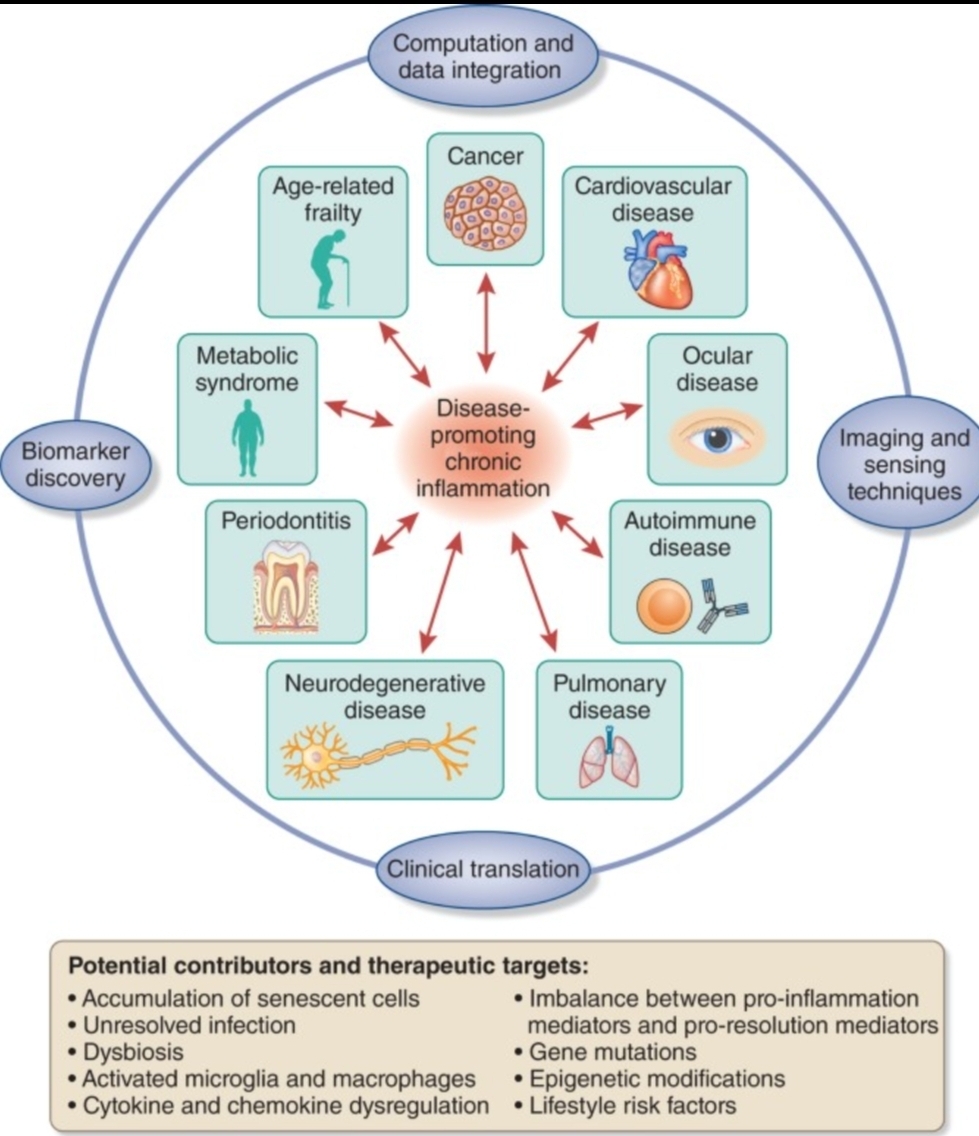
But in some diseases, like arthritis, your body’s defense system — your immune system — triggers inflammation when there are no invaders to fight off. In these autoimmune diseases, your immune system acts as if regular tissues are infected or somehow unusual, causing damage.
Symptoms of inflammation include:
Redness
A swollen joint that may be warm to the touch
Joint pain
Joint stiffness
A joint that doesn’t work as well as it should
Fever
Chills
Fatigue/loss of energy
Headaches
Loss of appetite
Muscle stiffness
When inflammation happens, chemicals from your body’s white blood cells enter your bloodor tissues to protect your body from invaders. This raises the blood flow to the area of injury or infection. It can cause redness and warmth. Some of the chemicals cause fluid to leak into your tissues, resulting in swelling. This protective process may trigger nerves and cause pain.
Higher numbers of white blood cells and the things they make inside your joints cause irritation, swelling of the joint lining, and loss of cartilage (cushions at the end of bones) over time.
RECOMMENDED PRODUCTS:
Deep Sea Fish
Ginseng RHs Capsule
GARLIC OIL CAPSULE
ALOE VERA CAPSULE
KUDING PLUS TEA
PROPOLIS CAPSULE
VItamin C
